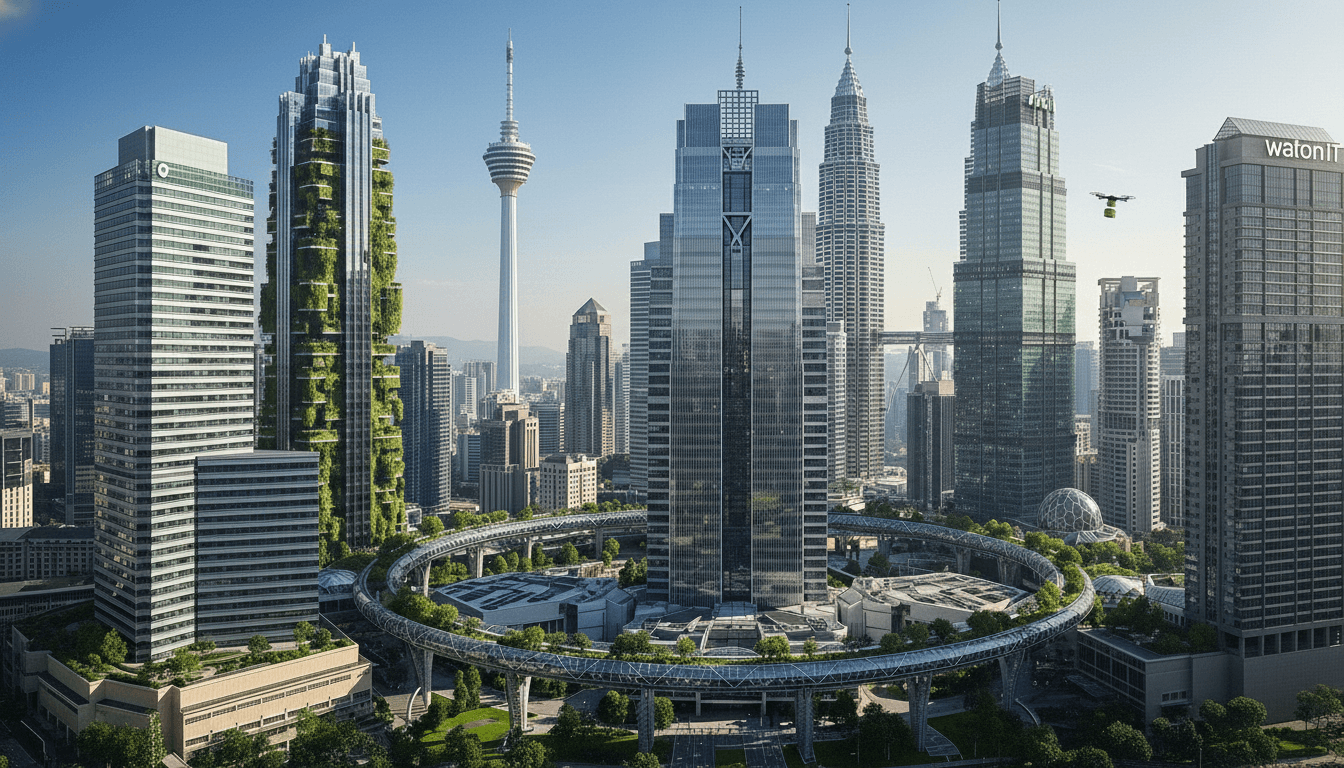
The Malaysian tech landscape is moving at a pace we haven't seen before. With the latest investments from Belanjawan MADANI 2026 and our national goal to become an AI Nation by 2030, we are looking at a pivotal year rather than just incremental change.
Whether you are leading a team through digital transformation or working on the front lines to keep systems secure, the shifts we see in 2026 will have a very real impact on your strategy and your bottom line. It is a lot to navigate, but staying ahead of these changes is what will keep our local businesses competitive.
Let's look at the five IT trends that Malaysian companies should keep at the top of their priority list this year.
Sovereign AI is an emerging trend that reflects Malaysia's long-term push for digital independence. While the government has committed RM2 billion to develop a Sovereign AI Cloud, the project is still in its early stages. This initiative is primarily about building a foundation so that, in the future, we are less reliant on foreign technology providers for our critical data needs.
Currently, most local businesses rely on global models like ChatGPT or Gemini. These tools are powerful, but they are not built specifically for our local context. They often struggle with the nuances of how Malaysians communicate, and there are ongoing questions about data sovereignty when information is processed on servers outside of our borders.
The goal of the Sovereign AI Cloud is to create a localized alternative where models are trained on data that is relevant to Malaysia. Although it will take time for this technology to mature, it eventually aims to provide better accuracy for local business needs. This includes a better understanding of local dialects and consumer behaviors that global models might overlook.
From a regulatory standpoint, the National AI Office is already beginning to outline early standards for AI governance. We can expect that following these local guidelines will become a standard requirement for companies looking to partner with the public sector or larger corporate entities in the future.
Even though the ecosystem is not yet fully developed, keeping an eye on local AI models now is a practical move. It allows your business to stay aligned with the national digital roadmap and ensures you are prepared as the technology and its regulations start to take shape.
Remember when everyone was excited about chatbots that could answer FAQs? That was 2024. Welcome to 2026, where we're moving way beyond simple question-and-answer interfaces into the era of Agentic AI.
So what exactly is Agentic AI? Think of AI agents as autonomous digital workers. Unlike traditional chatbots that wait for prompts and generate responses, AI agents can independently reason, plan, and execute multi-step tasks across different software systems without needing constant human intervention.
Gartner predicts that 40% of enterprise applications will be integrated with task-specific AI agents by the end of 2026. This is a significant jump from less than 5% in 2025. It shows that adoption is moving very quickly, rather than being a gradual change.
Picture this in practical terms. An AI agent manages your entire supply chain by monitoring inventory levels, predicting demand fluctuations, automatically reordering stock, and even negotiating with suppliers. Or consider an HR agent that handles complex payroll disputes, cross-references policies, calculates adjustments, and communicates resolutions to employees all autonomously.
For Malaysian companies, the shift towards AI-native development is the key opportunity here. This means building software and processes designed from the ground up to be managed by AI, rather than just bolting AI capabilities onto existing human-operated systems.
Let’s talk about something that usually only keeps IT departments awake at night: cybersecurity. The reality is that it should be a priority for business leaders too, because the numbers we are seeing are a massive wake-up call. Malaysia saw a 78% jump in ransomware attacks in 2024, and by early 2025, data breaches had already spiked another 29%. To make things worse, we are facing a huge talent gap. We need about 28,000 specialists by 2026, but we are nowhere near that number yet.
This is why the government is tightening the Digital Trust framework. The Cyber Security Act 2024 is now in full force, giving NACSA greater power to ensure companies actually follow security standards. They have also put RM30 million into Budget 2026 to strengthen our national defenses and align our strategy with the rest of ASEAN.
The big shift here is moving away from just reacting to attacks. We are moving toward preemptive security. This means using Continuous Exposure Management to find weak spots before hackers do. It also involves using AI to predict threats by spotting weird patterns in a network before they turn into a full-blown crisis.
You might have heard of Zero Trust Architecture. It is becoming the gold standard for a simple reason. The principle is never to trust and always verify. Every single user and device has to be authorized before getting access, no matter where they are.
If you are running an SME, there is an incentive you should not ignore. Budget 2026 introduced a 50% tax deduction for MSMEs that invest in cybersecurity training through NAICI. It is a smart move to upskill your team now while protecting your business, rather than waiting until you are already exposed to a threat.
The cloud conversation has changed quite a bit lately. We are no longer asking if we should move to the cloud. Instead, the focus is on how to architect a cloud strategy that meets evolving data sovereignty requirements.
Malaysian enterprises are increasingly moving away from relying purely on public cloud solutions like AWS or Azure. They are shifting toward hybrid and sovereign cloud architectures. The main driver here is data sovereignty, which is the principle that data must be subject to the laws of the country where it is collected or processed.
The updated Personal Data Protection Act (PDPA) now demands much stricter compliance after the 2025 amendments. Key changes include mandatory Data Protection Officers for certain organizations and a 72-hour breach notification requirement. There are also new rules for cross-border data transfers that require specific impact assessments. The message from the regulators is clear. Businesses now need to ensure their data stays within Malaysian borders.
To support this shift, the government has allocated RM2 billion for the MADANI Submarine Cable Connection project. This is a 3,190-kilometre undersea cable network linking Peninsular Malaysia with Sabah and Sarawak. It replaces the aging SKR1M network, which has already reached its capacity limits.
When you combine this with the continued rollout of 5G, real-time edge computing is finally becoming a practical reality. This means data can be processed locally and closer to where it is generated rather than in distant servers overseas. For industries like manufacturing and logistics where every millisecond counts, this is a major change.
The strategic move for 2026 is to evaluate your cloud architecture with data sovereignty at the center. Hybrid solutions that combine the scalability of the public cloud with the control of private or sovereign infrastructure are becoming the smart default for local businesses.
Finally, we need to talk about the environmental footprint of IT. It is a topic that is getting harder to ignore as we look toward the future. Malaysia is pushing for net-zero emissions by 2050 and aiming for 70% renewable energy capacity. This means IT is no longer just about performance or cost. It is now becoming about power and sustainability.
To put this in perspective, hyperscale data centers can consume as much power as a small city. In many cases, up to half of that energy is used just to cool the systems down. Data center electricity demand in Malaysia is projected to surge from 9 TWh in 2024 to 68 TWh by 2030. This makes the conversation about energy efficiency unavoidable for any growing business.
The government has already introduced guidelines for sustainable data centers which include metrics like Power Usage Effectiveness. If your company uses locally produced green technologies with the MyHIJAU Mark, you can actually qualify for a 100% Green Investment Tax Allowance. This is a huge financial incentive that many leaders might be overlooking.
Beyond the tax benefits, ESG reporting requirements are tightening globally. Malaysian companies will soon need to report the carbon footprint of their digital infrastructure to stay compliant. This is no longer just a nice-to-have feature. It is becoming essential for investor relations and maintaining a competitive edge in the market.
We are also seeing the rise of Green AI. These are AI models designed to use less computing power, which helps reduce both your operational costs and your environmental impact. As AI becomes a bigger part of your business, how efficiently you run those workloads will become a real differentiator.
The best move right now is to start measuring your current impact and looking for ways to optimize. Stakeholders are paying close attention to these initiatives, and being proactive here can save you a lot of trouble later.
If there is one theme connecting all five of these trends, it is that 2026 is the year Malaysian businesses must move from experimentation to execution.
The government has already laid the groundwork through billions in infrastructure investment, updated regulations, and incentive structures designed to accelerate digital transformation. The real question now is whether your organization will capitalize on these opportunities or risk being left behind while your competitors move faster.
Sovereign AI is no longer a distant concept because it is already here. Agentic AI is being deployed right now, and cyber threats are hitting Malaysian organizations every single day. At the same time, data sovereignty is now a legal requirement, and green IT has become a financial necessity.
The businesses that will thrive in 2026 and beyond are those that treat these trends as interconnected pillars of a solid digital strategy. In the rapidly evolving tech landscape of Malaysia, standing still is effectively the same as falling behind.
-
Navigating the digital landscape doesn't have to be a solo journey. From managing data sovereignty to optimizing your IT footprint for ESG compliance, AXO Technologies is here to support your transformation.
Let’s discuss how these 2026 trends impact your specific business goals. Connect with us at AXO Technologies, and let’s start the conversation.